

Box art
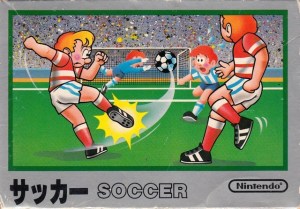
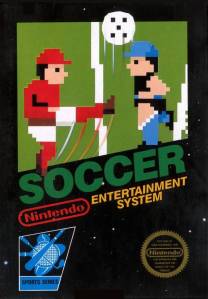
Technical Information
Platform: NES
Versions played: Nintendo Switch Online, NES, Wii Virtual Console
Developer: Nintendo
Publisher: Nintendo
Other versions: NA
Release date: Apr/09/1985 (JP); Oct/18/1985 (US)
Genre: Sports / Soccer
Where to play now: Nintendo Switch Online
A Missed Scoring Opportunity
About the Game
Soccer for the NES is a straightforward take on the sport. As the title implies, it’s all about soccer – there’s no additional complexity or depth here. There are no fancy menus, no in-depth statistics, not even tournaments; just you, a soccer field, and a ball. You delve into this pixelated rendition of the beautiful game, aiming to score goals and outplay your opponents in what’s intended to be a digital interpretation of soccer.
How Is the Gameplay
The controls are incredibly straightforward. You’ll be using the directional buttons for dribbling, pressing A to shoot the ball, and tapping B to pass it. When you’re in a defensive stance, the trusty B button switches control to the player you want to handle. And that’s about the extent of it. There are a few nifty tricks to master, though. Those directional buttons also serve as your goal-aiming tools, with an arrow pointing where your shot’s headed. The grand plan? Fool the keeper by sending him one way and shooting the other, ultimately leading to a goal. When it comes to nabbing the ball, simply saunter over to your opponent and make a snatch attempt.
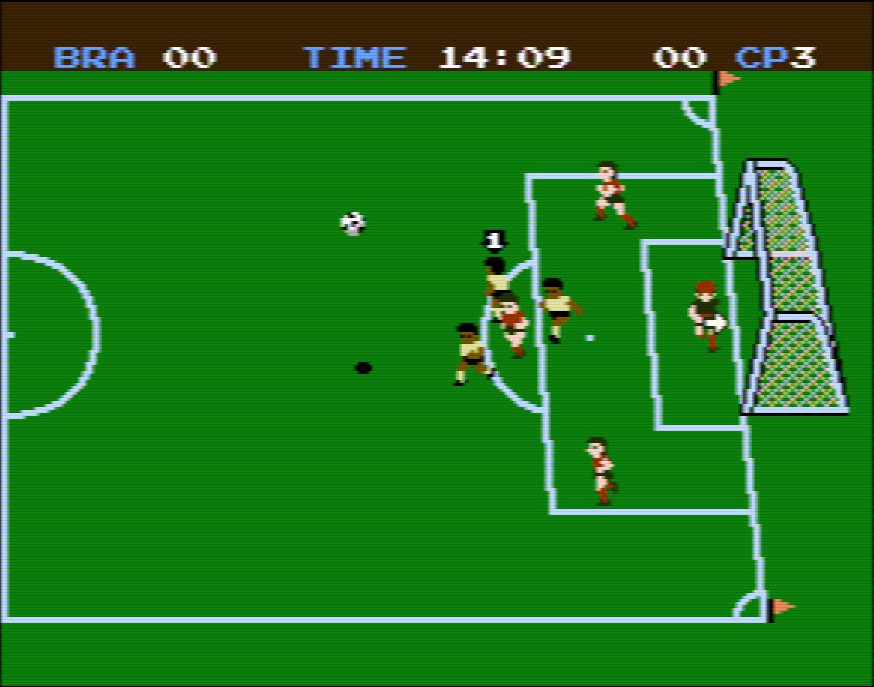
(credit: Citsgames, Nintendo)
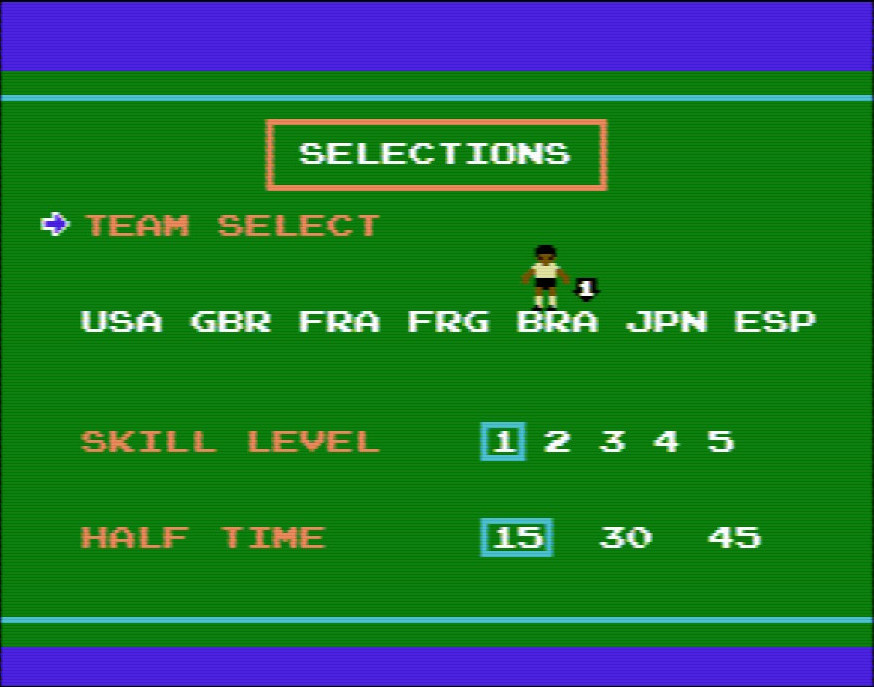
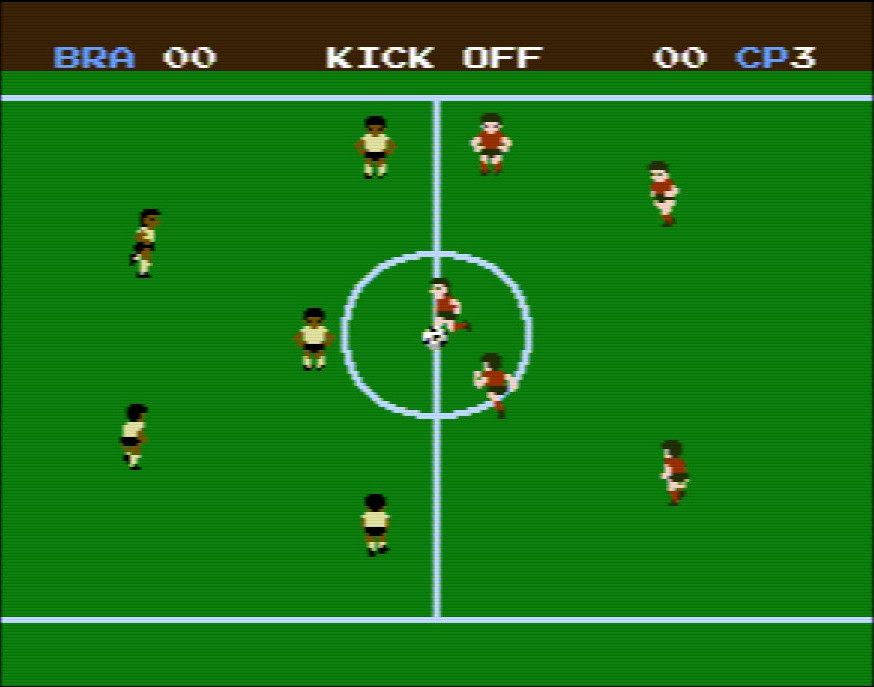
Each team’s got a mere 5 players plus the keeper, and tactical diversity? Not a chance. They all play using what you could generously call a 2-1-2 formation. As for options, the game is equally bare-bones. On the title screen, you get to choose between 1-player and 2-player games. Then, it’s off to the “Selections” screen, where you can pick your team, skill level, and match duration. But don’t get too excited, as there are only 7 teams available: USA, GBR, FRA, FRG, BRA, JPN, and ESP. Those acronyms presumably stand for United States, Great Britain, France, West Germany, Brazil, Japan, and Spain. Player stats? No differences there, meaning Japan and USA will feel just like Brazil and Germany.
When it comes to skill levels, there are five to choose from. The game’s a breeze up until level 3. Level 4 is when the CPU starts playing a tad more aggressively, and level 5? Well, that’s when things get seriously tricky, with the CPU team turning into ball-stealing bandits.
What’s Good About the Game
One of the game’s redeeming qualities is its simplicity. If you’re looking for a soccer game without any added complications or intricate mechanics, Soccer might have some appeal. It doesn’t overwhelm you with options or tactics, making it accessible for those looking for a quick gaming fix.
What Isn’t So Good About the Game
While simplicity has its merits, Soccer takes it to an extreme that can lead to boredom. The sluggish player movements and imprecise controls hinder the overall experience. Players tend to move slower than a tortoise in molasses, especially when they’ve got the ball at their feet. It can feel like a lifetime to make it to your opponent’s goal, primarily because passes and shots are about as reliable as a weather forecast during a tornado. Scooping up a loose ball? Well, that’s where the game’s accuracy takes a nosedive. Missing an easy ball because you strolled right past it? All too common.
Whether you’re a soccer fan or just a casual gamer, you might find the lack of depth and challenge a bit underwhelming. In comparison to other sports games on the NES, Soccer feels like a lightweight contender.
Technical Features
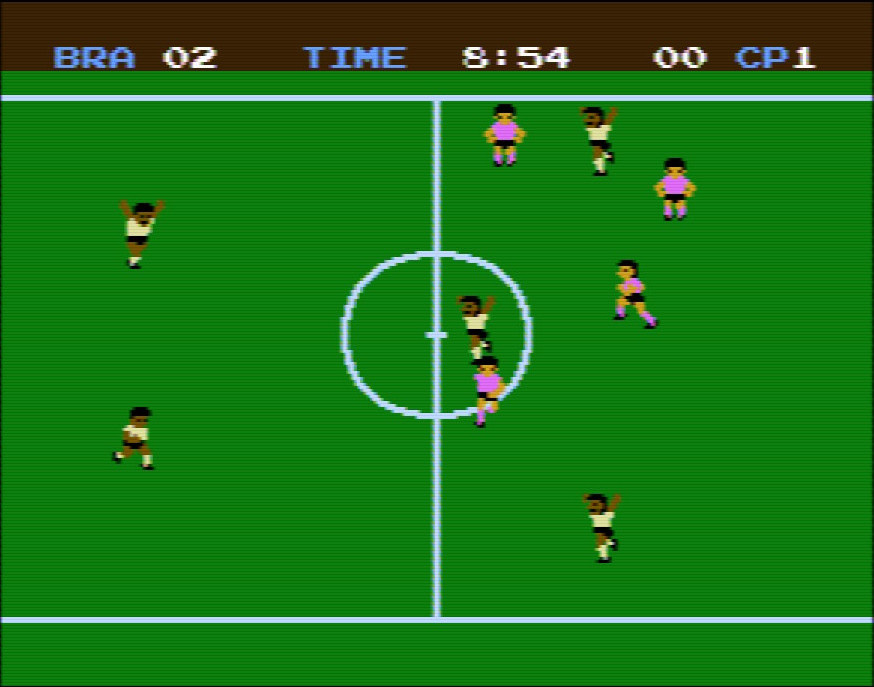
The graphics in this game are quite basic, even when measured against the standards of 1985. For comparison, Super Mario Bros., released in the same year, outshines it by a long shot. Nonetheless, the players do have a touch of charm in their design. The soccer field, on the other hand, remains as rudimentary as it gets. There’s one aspect that merits a special mention, and that’s the appearance of cheerleaders during half-time. They inject a dose of humor and fun into the game.

(credit: Citsgames, Nintendo)
In terms of audio, there’s nothing particularly outstanding or terrible here either. Like most sports games from that era, you’ll have some music playing during matches, though they are kind of annoying. The crowd does let out cheers when a goal is scored, which adds a nice touch. However, when it comes to sound effects, they leave much to be desired. The noise of the players kicking the ball is just that: noise, and not in a good way.
How Does It Compare
Compared to other sports titles on the NES, Soccer doesn’t hold up particularly well. It lacks the engaging gameplay and fluid controls found in more successful sports games. In the context of sports gaming history, it feels like an early experiment that eventually led to more polished and enjoyable sports titles.
Is the Game Worth It
While Soccer offers a straightforward soccer experience, its clumsy controls and sluggish gameplay hinder its appeal. Modern gamers looking for an enjoyable sports gaming experience may find Soccer underwhelming. Unless you have a strong nostalgia for this specific game, you might be better off exploring the broader array of sports titles available on the NES.
Tips and Tricks
– Patience is key: To succeed in Soccer, you’ll need a hefty dose of patience. The slow player movements and somewhat unpredictable controls can be frustrating, so take your time and plan your moves carefully.
– No long shots: Because goalkeepers can be controlled by players, and given the game’s aim system, it’s a good idea to get closer to your opponent’s goal before attempting a shot.
– Play with a friend: Like many NES titles, Soccer can be more enjoyable when played in multiplayer mode. If you’re going to dive into this game, bring a friend along to share in the mild frustrations and occasional triumphs.
Score

Gallery



 Citsgames
Share your opinion about this game.