

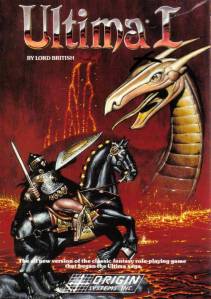
Box art
Technical Information
Platform: PC
Versions played: PC (GOG version)
Developer: Origin
Publisher: Origin
Other versions: Apple II / Atari 800 / Commodore 64 etc.
Release date: Jun/1981 (Apple II); Jul/1987 (DOS)
Genre: RPG / Western
Where to play now: GOG
A Trailblazing Pioneer
About the Game
Ultima, a classic RPG that paved the way for an entire genre, made a grand entrance on the Apple II scene in the early 1980s. It was a daring leap into the realm of fantasy, offering adventurers a sprawling world filled with secrets to uncover and monsters to vanquish. This pioneering title invited players to step into the shoes of the Avatar, making choices that would echo throughout the narrative. The PC-DOS port introduced this groundbreaking game to a new audience, extending the reach of a legendary series.
Richard Garriott, the mind behind the series, is rightfully regarded as one of the founders of computer RPGs, and for good measure. Having developed Akalabeth before, he used his learning to improve on the concept, setting some industry standards in the process.
With its open-world concept, intricate storytelling, and multifaceted gameplay, Ultima set the stage for a new gaming era. In its prime, it showcased the possibilities of interactive storytelling and world-building. Though the PC port attempted to introduce the classic Apple II experience to a broader crowd, the original version remains a remarkable testament to its era.
How Is the Gameplay
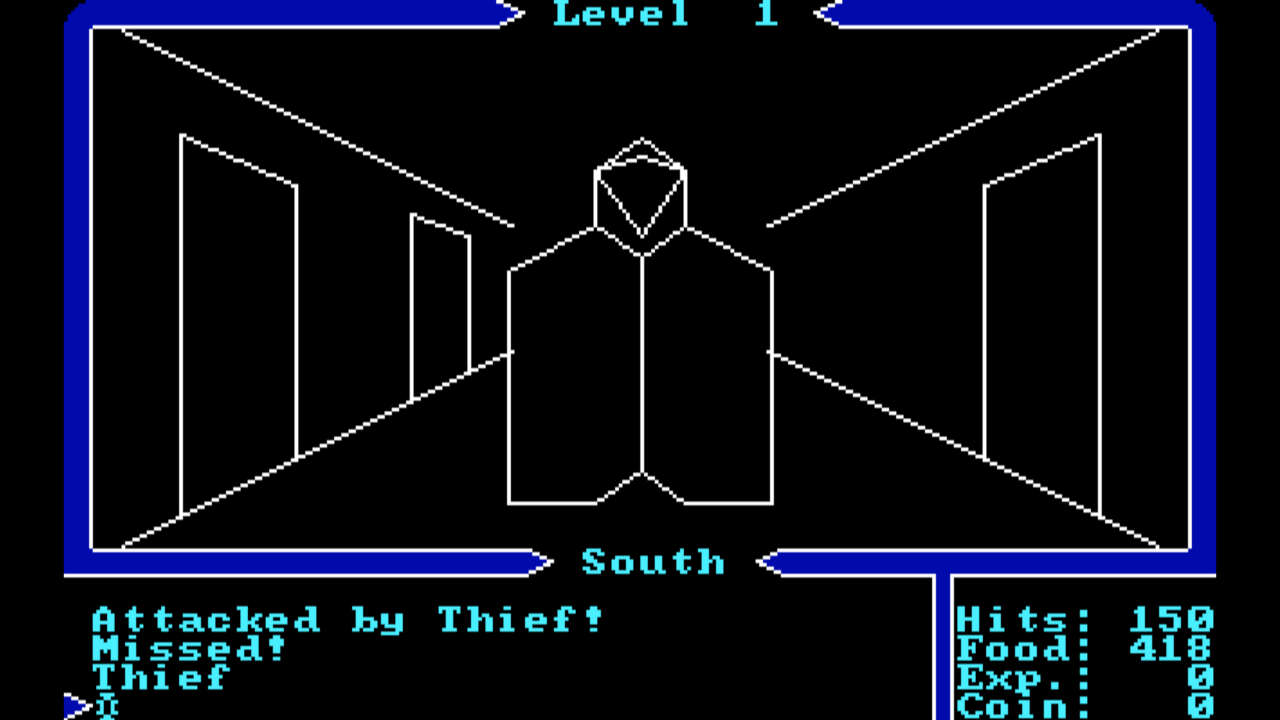
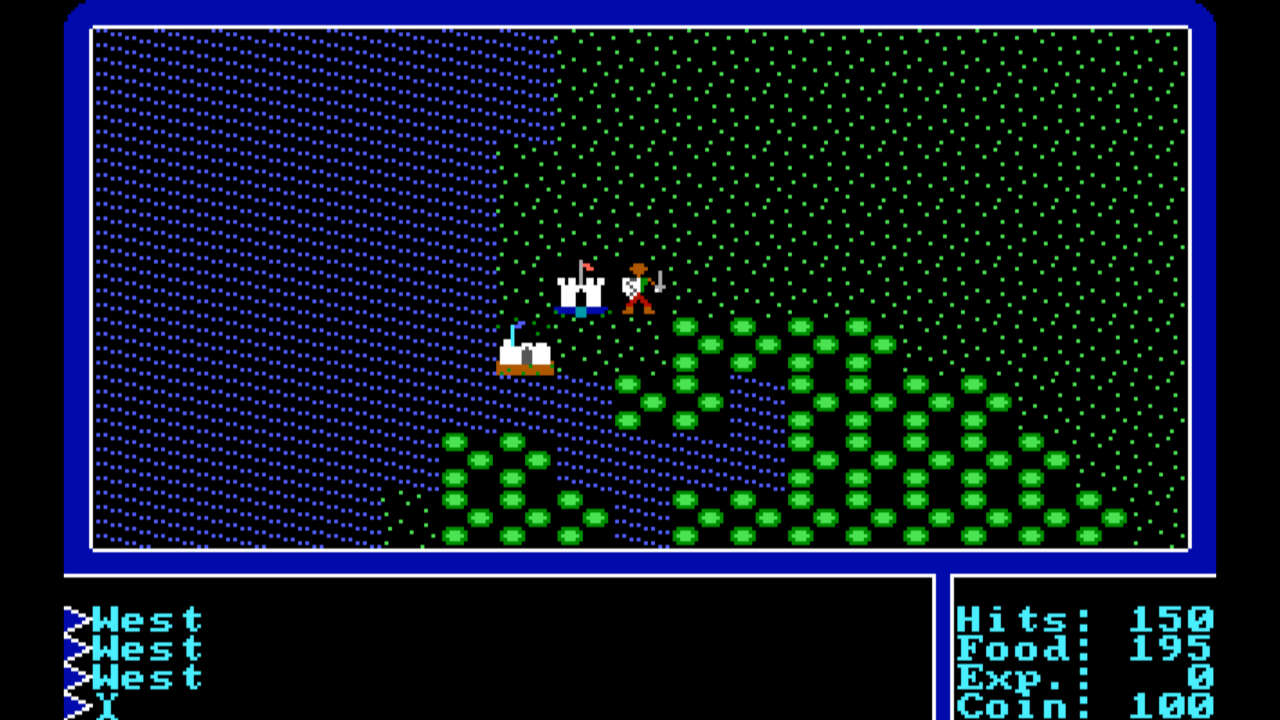
Ultima claims the title of one of the first-ever CRPGs, a game that, alongside the Wizardry series, laid the foundation for countless RPGs that followed. The gameplay exudes classic charm: tile-by-tile exploration on the overworld and first-person dungeon delving. In the 1980s, its innovations were groundbreaking, but by today’s standards, it feels about as modern as a rotary phone at a tech convention. Combat encounters, for example, are turn-based and text-driven, offering a unique strategic element that seasoned RPG fans might appreciate.
However, the game’s user interface and controls, akin to deciphering ancient runes, have not aged well. Each action is performed by pressing a specific letter on the keyboard, making it almost impossible to play without a guide to clarify these commands. Additionally, combat is somewhat awkward; it’s always turn-based, with visible enemies on the map, but in dungeons, battles become random encounters. Despite its historical significance, the gameplay serves as a stark reminder of how far the gaming industry has come.
What’s Good About the Game
Ultima‘s true treasure lies in its role as a forefather to modern RPGs. It introduced concepts like non-linear storytelling and moral choices that would profoundly influence countless games. It’s an archaeological artifact, a portal to the early dreams of a genre that would eventually give us epics like the Baldur’s Gate series and The Elder Scrolls.
What Isn’t So Good About the Game
As noble as Ultima‘s pioneering spirit is, Father Time has not been kind to it. Its limited graphics capabilities, combined with a clunky user interface, make it a tough sell for modern players. The mechanics, while groundbreaking at the time, now feel as smooth as dragging a sack of anvils through a swamp. Some puzzles and navigation can be more frustrating than a crossword puzzle written in an unknown alien language. Ultimately, Ultima is an essential relic but not something you’ll fire up for a relaxing evening of RPG adventure.
Technical Features
When evaluating the technical aspects of Ultima for PC-DOS, we must put on our rose-tinted glasses and journey back to the 1980s. This game pushed the hardware boundaries of its time, boasting an open world, albeit one made up of simple, colorful tiles. While the original Apple II version laid the series’ foundation, the PC-DOS port ushered in graphical enhancements, immersing players deeper into the Ultima universe.
The transition from the Apple II to the PC was no small feat. Here, Ultima introduced improved graphics compared to the original, offering a richer color palette (although still pixelated by modern standards). As for sound, well, it’s as silent as a mime in a library (bearing in mind that sound cards were rarer than a unicorn wearing sunglasses at that time).
How Does It Compare
Compared to its Apple II ancestor, the PC-DOS iteration of Ultima marked a clear step forward, especially in terms of visuals and interface. This shift signified a pivotal moment in the series’ evolution, setting the stage for the more refined Ultima titles that would follow. While the Apple II version may ignite more nostalgia for some, the PC release undoubtedly widened the RPG world’s horizon.
Yet, viewed through the lens of modern RPGs, Ultima feels like a stepping stone, surpassed by its own descendants. It’s like comparing the Wright brothers’ plane to a modern jetliner. They both got us in the air, but one is considerably more comfortable.
Is the Game Worth It
For those curious to unearth the RPG genre’s foundations and comprehend the principles that underpin contemporary role-playing adventures, Ultima for PC-DOS is a chapter in history worth revisiting. Nevertheless, for gamers seeking a captivating and polished RPG experience, Ultima might not be the obvious choice. It’s a game that merits respect and acknowledgment for its role in shaping the gaming landscape, even if it has not aged like fine wine but more like a forgotten jar of pickles.
Tips and Tricks
– Take Notes and Make Maps: With in-game maps and quest markers nowhere to be found, keep a physical notepad close. Scribble down the locations of crucial NPCs, towns, and dungeons, and don’t hesitate to sketch maps as you explore. It’s like leaving breadcrumbs in the woods, but more high-tech.
– Embrace Exploration: Ultima‘s open-world design rewards curiosity. Don’t fear the unknown; wander off the beaten path to unearth hidden locations, treasures, and quests. Some of the juiciest loot and puzzle solutions might be stashed in the most unassuming places. Patience and thorough exploration will be your trusty sidekicks.
– Save Often: Save your game like your digital life depends on it. With the occasional quirk and the level of difficulty reminiscent of a crossword puzzle written in Klingon, frequent saves are your safety net in the world of Ultima.
Game Trivia
– Ultima‘s development under Richard Garriott, also known as Lord British, was a solo quest. Garriott single-handedly programmed and designed the original game, laying the cornerstone for his legendary game development career. It’s like saying he built the Parthenon, but with lines of code instead of marble.
– The PC-DOS version of Ultima marked a significant milestone in the series’ history, pushing it toward more advanced and immersive RPG experiences. It’s like watching a classic silent film and then going to a modern 3D blockbuster. You appreciate the history but prefer the popcorn at the new movies.
Score

Gallery
 Citsgames
Share your opinion about this game.