
Box art

Technical Information
Platform: NES
Versions played: Nintendo Switch Online, Atari 2600, NES
Developer: Nintendo
Publisher: Nintendo
Other versions: Arcade / Atari 2600 / Atari 7800 / Apple II / MSX and others
Release date: Jul/15/1983 (JP); Jun/08/1986 (US)
Genre: Platform / 2D
Where to play now: Nintendo Switch Online
A Barrel of Fun and History
About the Game
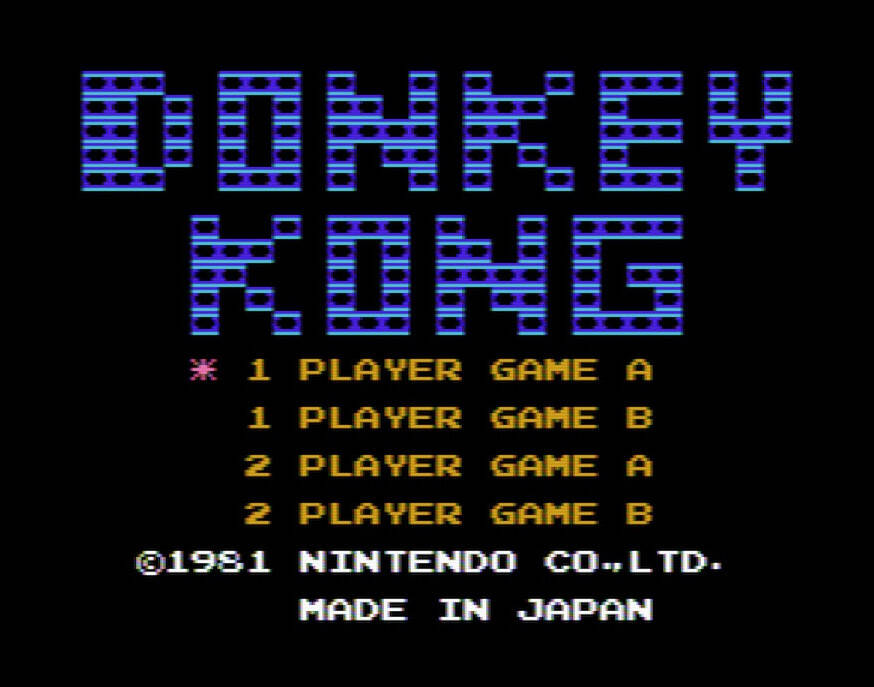
Donkey Kong is a game that holds a special place in the history of gaming. It’s one of the titles that helped define the platforming genre and set the stage for countless games that followed. If you’ve ever tried climbing its ladders and dodging its barrels, you know exactly what I’m talking about.
In Donkey Kong, you step into the shoes of a not-so-famous hero named Mario, on a mission to save Pauline from the clutches of the formidable ape himself. It’s a tale as old as time (or at least as old as the early 1980s). The premise might be straightforward, but there’s an undeniable charm in the challenge – it’s simple yet addictive.
When the NES version was released as a launch title for the Famicom in Japan, it played a crucial role in establishing Nintendo as a powerhouse in the gaming world. Bringing the arcade experience home was no small feat, but Donkey Kong pulled it off, laying the groundwork for the company’s future successes.
How Is the Gameplay
Jump, climb, repeat. Donkey Kong‘s gameplay is both a test of your reflexes and your patience. It’s pretty addictive, and you’ll keep coming back for more, even when Donkey Kong seems intent on your digital demise. However, the loop can become quite repetitive after a few tries.
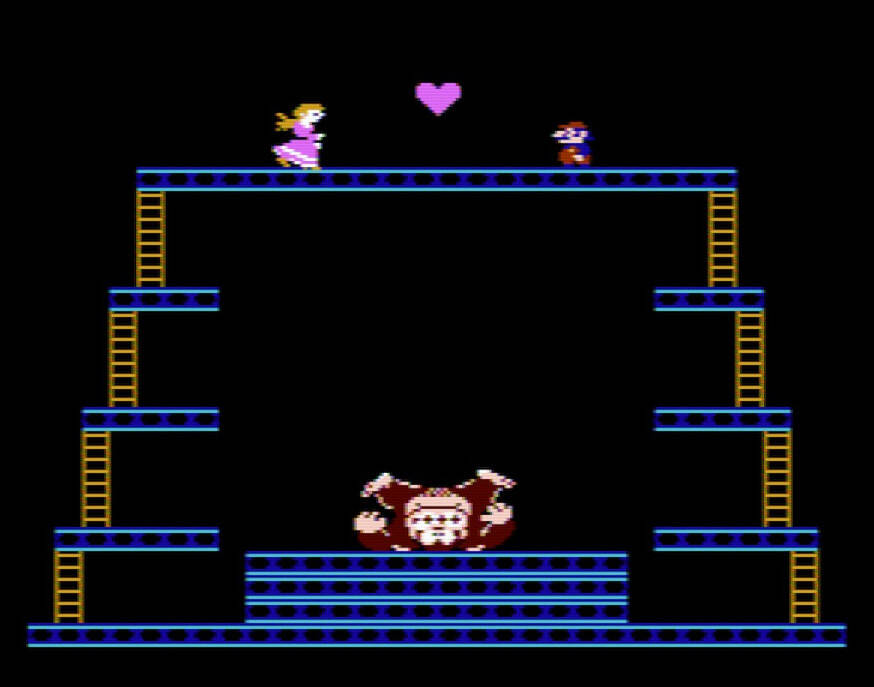
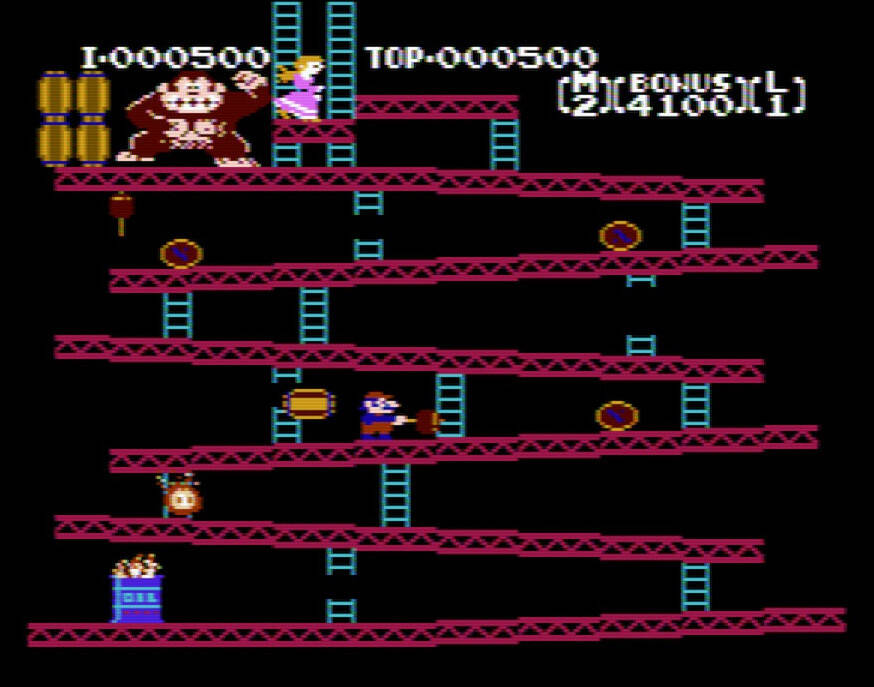
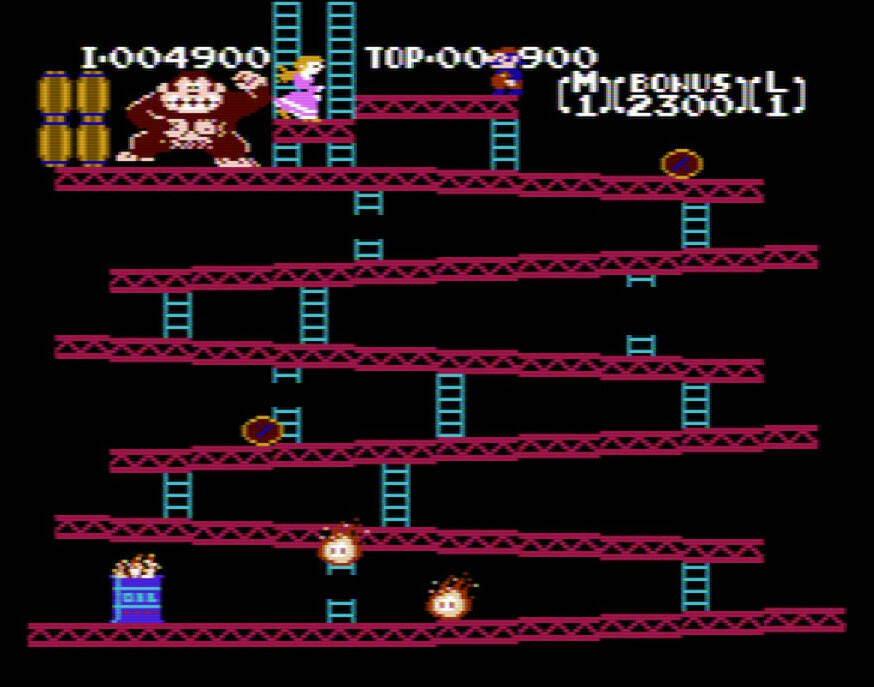
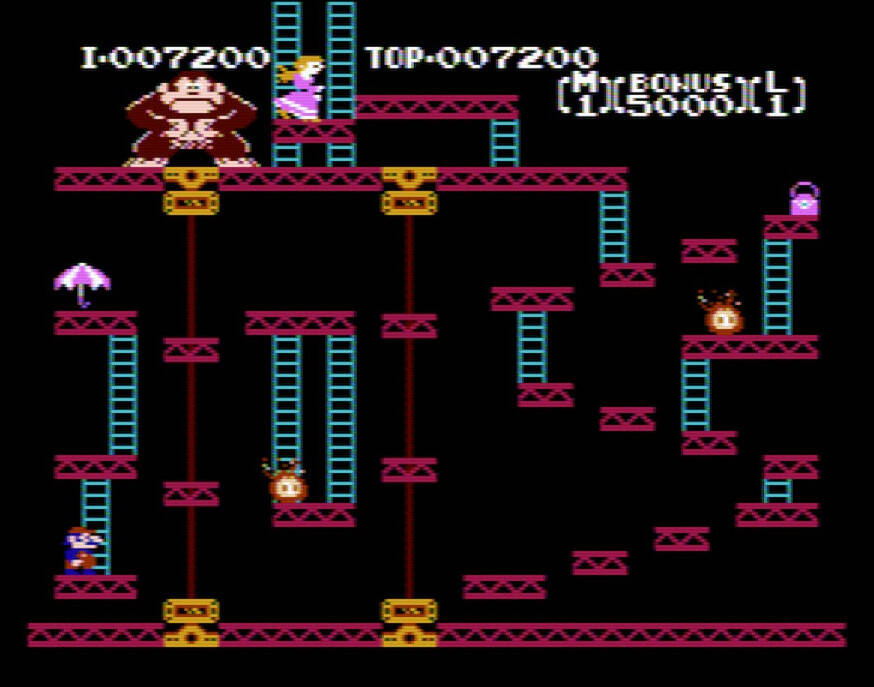
The gameplay unfolds on static screens, where the main goal is to climb to the top while dodging an array of obstacles thrown your way by Donkey Kong (barrels, flames, and… trampolines?). There are only three distinct levels, but they loop with increasing speed and hazards.
What I find amazing is that the game cleverly incorporates elements of puzzle-solving, forcing you to strategically decide the best path to take when climbing. In some stages, you can collect a hammer, which makes Mario almost invincible (you can still get hit, so watch out!) for a limited time and allows him to destroy obstacles.
What’s Good About the Game
Donkey Kong might be a grumpy primate, but he sure knows how to make a game exciting. The simple-yet-addictive gameplay will have you leaping over barrels, climbing ladders, and experiencing a mix of frustration and triumph that’s uniquely Donkey Kong. The level design is clever, and Mario‘s jumps are generally precise, especially when compared to other games of the time.
It’s also worth noting that this game was one of the first platformers ever and is also considered to be the first game in which the story precedes game design, instead of being an afterthought. It’s a mindset that permeates Nintendo’s philosophy until today.
What Isn’t So Good About the Game
No game is without its flaws, and this one is no exception. Donkey Kong can be seriously stubborn. Although the controls are generally tight, they can sometimes feel unresponsive, especially when you’re trying to climb ladders and the joystick doesn’t seem to cooperate.
While the simplicity of Donkey Kong is part of its charm, it can also be limiting. The game’s mechanics don’t evolve much throughout, which can make it feel repetitive after extended play sessions. Additionally, the lack of a save feature in the original version means you’ll need to write down your high scores to remember them. Fortunately, newer versions of the game correct this issue in different forms.
The biggest flaw, however, is the lack of one stage from the original arcade. It may not seem much, but it effectively means that the home version is missing a fourth of the original content, which is a significant drawback.
Technical Features
When it comes to technical prowess, Donkey Kong doesn’t exactly push the NES hardware to its limits. However, that’s not necessarily a bad thing. The character animations, especially Mario‘s comically exaggerated jumps, add a whimsical touch that’s hard not to love. Even though Donkey Kong may be old-school, its visuals have aged like a fine barrel of bananas – simple yet charming in their own way. Well, at least in my opinion…
The music might be simple, but it’s iconic. During gameplay, there are only a few sounds, but between every level and at the title screen, some tunes are played, and chances are you’ll recognize them! As for the sound effects, they’re exactly what you’d expect from an arcade classic, with bleeps and bloops galore.
How Does It Compare
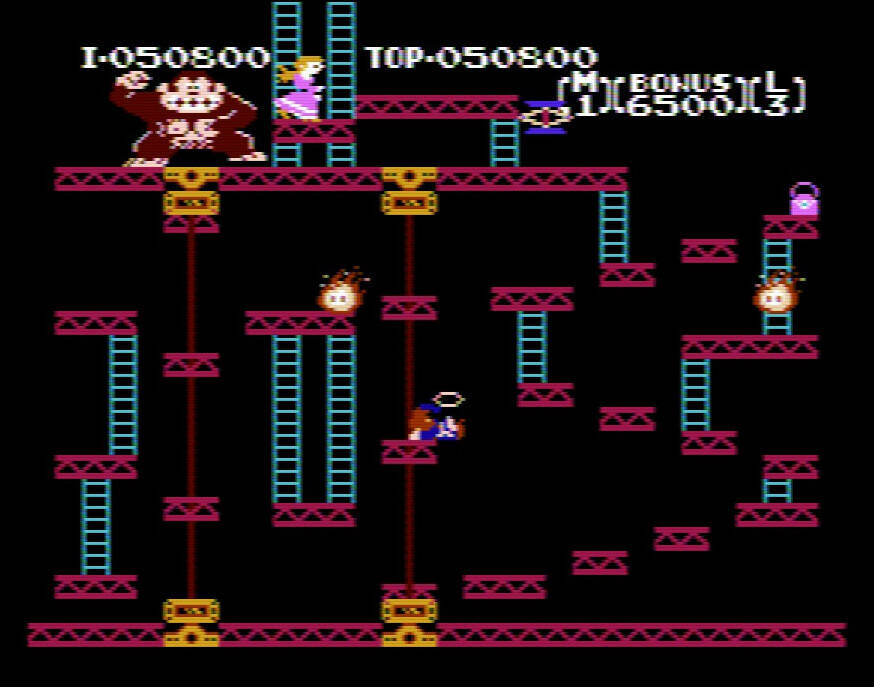
Well, the game is a pioneer. There weren’t many games to compare it to at the time of its release, and it paved the way for an entire genre, including the Super Mario series, which became an iconic franchise in its own right. On the arcades, Donkey Kong was one of the gold standards, as it introduced players to the concept of multi-stage levels and challenging platforming.
However, the gaming market evolved rapidly after Donkey Kong‘s debut. As technology advanced, newer games started to incorporate what worked and improve upon what didn’t. The simplicity that once made Donkey Kong so engaging eventually became its limitation, as players sought more complex and varied experiences.
Is the Game Worth It
Donkey Kong for the NES is a nostalgic trip down memory lane. If you’re up for a challenge and enjoy classic platforming, it’s a must-play, at least for its historical relevance. However, if you prefer the original arcade experience, you can also get it on the Nintendo eShop. Just be ready for a few infuriating moments with those barrels. Don’t blame us if you find yourself yelling at the screen!
Tips and Tricks
– Timing is Key: In Donkey Kong, precision timing is crucial. Learn the patterns of the barrels and other obstacles to make your jumps and climbs more effective.
– Use the Hammers Wisely: The hammers in the game can eliminate enemies and earn you extra points. Don’t waste them too early; save them for when you really need them to clear the screen or secure a higher score.
– Practice Makes Perfect: Don’t get discouraged by early failures. The more you play, the better you’ll become at mastering Mario’s movements and overcoming Donkey Kong‘s challenges.
Game Trivia
– Donkey Kong was initially conceived as a Popeye game but had to be rebranded when the licensing deal fell through.
– The character “Jumpman” eventually became the beloved Mario we know today.
– Donkey Kong‘s success in the arcade helped establish Nintendo as a major player in the gaming industry.
Score

Gallery



 Citsgames
Share your opinion about this game.